
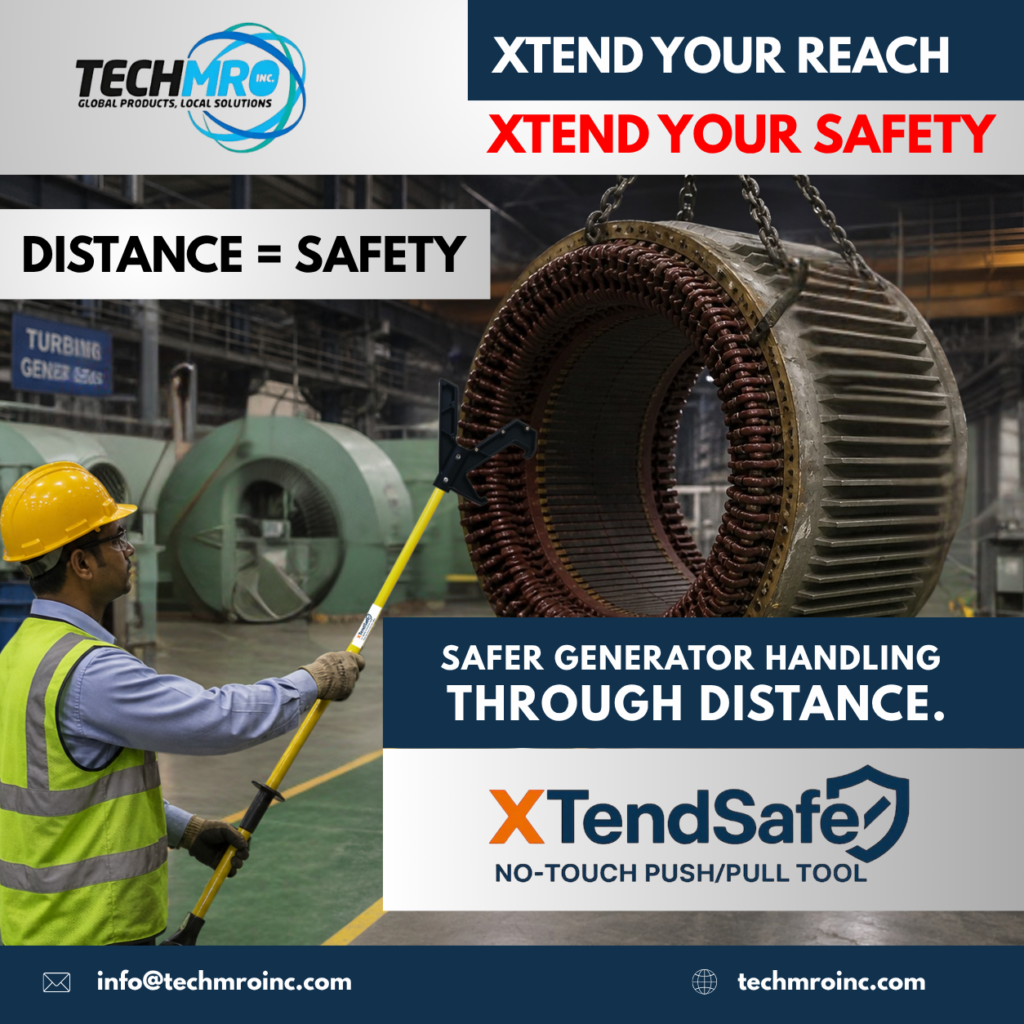
Why Generator Stator Handling Is One of the Highest-Risk Operations During Power Plant Outages
Power plant outage maintenance environments involve suspended loads, confined turbine hall spaces, heavy equipment movement, crane coordination, and severe operational pressure.
The Reality of Modern Power Plant Outages
Modern power plants operate under enormous operational and financial pressure during planned outages. Whether the outage involves a turbine-generator overhaul, generator rewind, stator replacement, or major inspection campaign, every hour of downtime affects production schedules, maintenance budgets, grid reliability, and operational profitability.
Generator stator handling operations are among the most technically demanding maintenance activities performed inside a power generation facility. These operations require highly coordinated movement of extremely heavy electrical components using overhead cranes, lifting beams, rail-guided transport systems, hydraulic skidding systems, precision rigging procedures, and confined-space alignment activities.
Unlike routine maintenance work, stator handling activities involve a combination of:
- Heavy suspended-load interaction
- Precision positioning requirements
- Restricted turbine hall maneuverability
- Multiple contractor coordination
- High-risk rigging activities
- Compressed outage timelines
- Elevated worker exposure
A single operational error during generator stator extraction or reinstallation can trigger cascading problems throughout the outage schedule. Alignment failures, uncontrolled load movement, communication breakdowns, or unexpected rigging instability can lead to equipment damage, extended downtime, rework costs, safety incidents, and operational delays that impact overall plant reliability.
In many power plants, outage teams operate continuously across day and night shifts to meet restart deadlines. Under these conditions, maintenance environments become increasingly dynamic and high pressure. Crane operators, rigging specialists, outage planners, EHS professionals, reliability engineers, and maintenance crews must coordinate every movement carefully while maintaining strict adherence to safety procedures.
Modern outage safety strategies increasingly focus on reducing direct worker exposure to suspended loads, pinch points, line-of-fire hazards, and hazardous movement zones during generator stator handling activities.
This shift toward distance-based safety methods is becoming a major trend across the power generation industry because maintenance teams recognize that reducing worker proximity to heavy moving equipment significantly lowers injury exposure during outage maintenance operations.
Why Suspended Loads Create Serious Injury Exposure
Generator stators used in utility-scale turbine-generator systems can weigh hundreds of tons and require highly controlled movement during extraction, transportation, inspection, rewinds, upgrades, and reinstallation procedures.
During these operations, workers are often positioned near suspended loads, crane-assisted movement paths, rigging systems, confined turbine hall structures, and precision alignment areas where even small positioning errors can create severe consequences.
Suspended-load interaction creates multiple layers of risk because heavy components possess enormous momentum during movement. Once a load begins shifting unexpectedly, workers may have limited reaction time and restricted escape routes.
In many outage environments, maintenance crews still rely on manual positioning assistance methods that place workers dangerously close to hazardous movement zones.
This creates direct exposure to:
- Crush hazards during alignment procedures
- Pinch-point injuries near rail systems
- Caught-between incidents during load maneuvering
- Uncontrolled load swing during crane operations
- Sudden directional movement caused by rigging instability
- Hand injuries during manual guidance activities
- Line-of-fire exposure near moving suspended equipment
One of the most dangerous aspects of generator stator handling is that hazards often develop gradually rather than instantly. Small positioning deviations can rapidly escalate into unstable movement conditions, especially when crews operate inside confined turbine hall environments with limited maneuverability.
Industrial safety investigations consistently identify line-of-fire incidents and suspended-load interaction as major contributors to serious maintenance injuries in heavy industry environments involving crane-assisted equipment movement and outage maintenance operations.
For many utilities and outage contractors, improving suspended-load interaction procedures has become a major focus area within broader human-performance and injury-prevention initiatives.
Why the Industry Is Moving Toward Hands-Free Load Control
Across the power generation industry, outage maintenance teams are increasingly prioritizing worker separation from hazardous movement zones during suspended-load interaction.
This shift is being driven by a combination of operational realities, safety expectations, and long-term reliability goals.
Historically, many heavy-load positioning procedures required workers to remain physically close to moving components while guiding or stabilizing suspended equipment during alignment activities.
However, modern safety investigations continue to demonstrate that close-proximity interaction with suspended loads significantly increases exposure to:
- Line-of-fire incidents
- Pinch-point injuries
- Hand and finger injuries
- Caught-between hazards
- Unexpected load movement
- Rigging instability
As a result, outage maintenance strategies are evolving toward engineered positioning methods that improve worker separation while maintaining precision load-control capabilities.
This transition is supported by:
- Stricter industrial safety expectations
- Human-performance improvement initiatives
- Operational reliability goals
- OSHA and industry compliance programs
- Utility risk-management strategies
- Injury-prevention campaigns
- Improved outage workflow planning
The farther workers remain from suspended loads, pinch points, and uncontrolled movement zones, the lower the likelihood of serious injury exposure during outage maintenance operations.
Modern outage teams increasingly recognize that effective suspended-load control is not simply about moving equipment efficiently. It is about reducing exposure while improving positioning precision, communication reliability, and overall maintenance safety performance.
This philosophy is reshaping how utilities approach:
- Generator stator movement procedures
- Crane coordination workflows
- Critical lift planning
- Rigging safety protocols
- Heavy-load alignment procedures
- Worker-separation strategies
Modern Safety Solutions for Generator Stator Handling
Modern outage maintenance strategies increasingly emphasize engineered positioning systems that improve load control while reducing worker exposure.
Xtendsafe Push/Pull Tool supports this modern approach by helping maintenance teams improve suspended-load interaction while reducing direct worker exposure during outage operations.
Improve Suspended-Load Safety During Outage Maintenance
Learn how modern distance-based positioning methods help reduce worker exposure during generator stator handling and heavy-load maintenance activities.
Email: info@techmroinc.com
Visit Website View Product